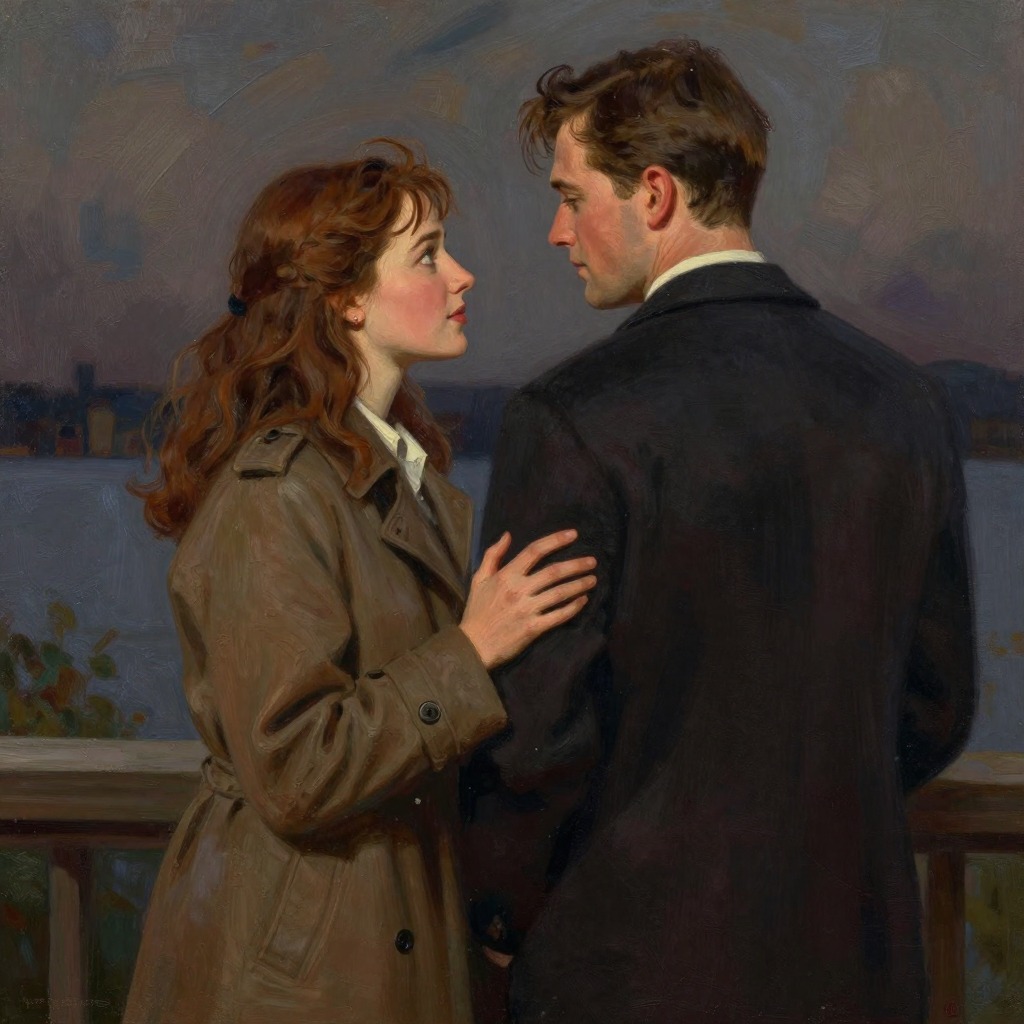
Brices Creek
Brices Creek is the tidal waterway that runs beside Noah Calhoun's restored plantation home in New Bern, North Carolina, and it functions as the novel's most persistent geographical and emotional anchor. The creek is not merely a backdrop but an active presence in Noah's life: he kayaks its waters each morning, fishes from its banks, and sits on his porch in the evenings watching the trees and their reflections in the river. It is the place where he works, remembers, and ultimately waits, and it becomes the shared territory where his past and present converge. The creek's constancy—its ability to remain unchanged while the people around it age and suffer—makes it a quiet counterpoint to the novel's central themes of memory, loss, and enduring love.
Setting and Daily Rituals
Noah's home sits on twelve acres adjacent to Brices Creek, and the creek shapes his daily routines from the moment he wakes. He rises at five and kayaks for an hour up the creek, letting the river "work its magic," loosening his muscles and clearing his mind before the day begins. He eats his lunch at the creek because the mullets are jumping, watching them leap three or four times and glide through the air before vanishing into the brackish water. He finds pleasure in the fact that their instinct has not changed for thousands, maybe tens of thousands, of years—a small, steady reassurance in a world altered by war and loss. In the evenings, he sits on the porch with his guitar, listening to the crickets and rustling leaves, thinking that the sound of nature is more real and arouses more emotion than things like cars and planes. His father had told him, the day he shipped out for war, that these natural sounds are "God's music" and will take him home. The creek, with its constant flow and its resident wildlife—raccoons, possums, and the hound dog Clem—becomes Noah's refuge and his connection to a simpler, more authentic way of being.
The Site of Reunion and Memory
The creek is also the stage for the novel's central reunion. When Allie Nelson drives to Noah's house in October 1946, she crosses the Trent River on an old-fashioned drawbridge and turns onto a gravel road that winds between antebellum farms, and the constancy of the place brings back a flood of memories. She recognizes landmarks she had long forgotten, including an old abandoned church she had explored that summer and a majestic oak tree on the riverbank where she first fell in love. The creek itself becomes the setting for their renewed intimacy: Noah takes her to the dock, where she finds the carving "Noah loves Allie, in a heart" that he had made a few days before she left fourteen years earlier. The next day, he takes her on a canoe trip up the creek to a hidden lake fed by its waters, where thousands of tundra swans and Canada geese surround them. The creek thus carries the physical traces of their shared past and provides the space where they can begin to recover it.
The Creek as Witness to Change and Loss
As the novel shifts to the present day, Brices Creek remains a constant presence, but its meaning deepens. The elderly Noah, now living at Creekside Extended Care Facility, is given a room where he can see the creek, and he watches it roll by his window, finding it a source of inspiration. He reflects that the creek is a contradiction—a hundred thousand years old but renewed with each rainfall—and that a man can learn many things from watching water. The creek becomes a symbol of the enduring natural world against which the ravages of Alzheimer's disease and old age are measured. When Allie, in her confused state, asks Noah to help her remember who she is, he takes her to sit by the creek and watch the birds, and it is there that they begin to get to know each other again. The creek, which once witnessed their youthful passion, now witnesses their final, fragile attempts to connect. It is the one thing that remains stable and beautiful even as their memories fade, and it offers Noah a kind of solace: the knowledge that some things, like the mullets' instinct and the water's flow, endure.
The Creek and the Novel's Structure
The creek also structures the novel's narrative movement. The story of Noah and Allie's reunion unfolds along its banks, from the porch where Noah first sees Allie's car to the dock where they share their first meal of crabs to the hidden lake where they make love during the storm. In the present-day frame, the creek is the setting for their quiet conversations and the place where Noah brings Allie to watch the goslings and the osprey. The creek thus links the two temporal layers of the narrative, providing a continuous geographical thread that connects the young lovers of 1932 and 1946 to the elderly couple facing the end of their lives. It is the physical embodiment of the novel's central idea: that love, like the creek, can persist through time, changing in form but never losing its essential nature. When Noah, after his stroke, watches the creek in the darkness and sees the reflection of clouds on the water, he is drawn to its mystery, and it becomes a meditation on the passage of time and the possibility of transcendence. The creek, in the end, is not just a place but a principle—a reminder that even as individual lives end, the current of love and memory continues to flow.